











Surely you’ve heard of ChatGTP: it’s been on everyone’s lips since its launch in November 2022. You may have used this OpenAI chatbot to ask questions, write an email, or sketch an article. You’re less likely to have thought about ChatGTP’s impact in terms of its carbon footprint, energy consumption, or related social divisions. Haven’t you?
If you care about sustainability and climate change but have never thought about the impact of artificial intelligence and technology practices on the environment and society, keep reading this article (instead of asking ChatGTP😉).
First of all, what is the environmental impact of artificial intelligence?
Doubts about the sustainability of ChatGPT are not an isolated case but relate to the world of artificial intelligence (AI) in general. Indeed, there is a lack of awareness of the environmental impact of artificial intelligence, even though studies in information and communication technology (ICT) reveal that AI contributes significantly to 2 to 4% of total greenhouse gas emissions produced by the global technology industry.
One of the prominent question marks about the sustainability of ChatGTP concerns its carbon footprint throughout its life cycle. Several authors have already tried to estimate the carbon emissions of ChatGTP in training artificial intelligence models. For example, comparing them with the carbon footprint of BLOOM, another language model based on artificial intelligence, such as in this article by Melissa Heikkilä, a senior journalist at MIT.
Indeed, there is a lack of transparency about ChatGTP’s carbon footprint. When ChatGTP is asked what its carbon footprint is, the system’s response is:
“As an AI language model, ChatGPT itself does not produce greenhouse gas emissions or contribute directly to climate change. However, the technology and infrastructure that enable ChatGPT’s operation may contribute to GHG emissions, particularly if they rely on non-renewable energy sources.”
In this regard, OpenAI has not disclosed any specific data on the number of servers, data centres, and IT infrastructure involved in its machine learning processes, so it is rather difficult to calculate GHG emissions along the entire lifecycle process accurately and the specific amount of energy required by this artificial intelligence model to be trained and to run daily.
In general, all machine learning tools require a large amount of electricity in the initial learning phase to run the servers and cool the data centres. These training procedures allow each language model to develop the ability to analyse large amounts of data retrieved from the Internet, but they are energy-intensive activities.
In addition, artificial intelligence programs such as ChatGTP require a lot of energy to run daily. Danish data scientist Kasper Groes Albin Ludvigsen has calculated that ChatGTP’s emissions per single search result are around 522 tCO2e. Chris Pointon’s brief analysis shows that this AI model could emit about 3.8 tons of carbon dioxide per day, considering the large amount of traffic, visits, and queries received daily.
All these concerns about the carbon footprint of AI and ChatGTP combine with the questionable sustainability of energy sources. Considering that “the Internet is the world’s largest coal-fired machine” and all data comes from the Web, it is very likely that the energy used comes from non-renewable sources, such as fossil fuels.
Will artificial intelligence and the tech industry put social sustainability at risk?
In addition to the environmental costs involved in AI projects, integrating AI tools into human activities has multiple societal implications. In this section, we will briefly discuss just three of them.
First, AI could reinforce social divisions by reproducing the gender, ethnic, and social prejudices widespread in today’s societies.
Why?
Overall, AI requires an enormous amount of information retrieved from texts, photos, and videos to formulate written responses or recreate images. The data on which AI algorithms are trained comes from websites and social media through machine learning models.
However, online content often replicates society’s power structures, injustices and inequalities in the real world.
AI’s natural language models are then trained on already biased data, which could play an increasingly important role in perpetuating unjust and biased worldviews.
A question of access: to online data … and offline jobs
Second, access to the Internet and, thus, to artificial intelligence is unequal. According to the United Nations’ International Telecommunication Union (ITU), in 2022 still, 2.7 billion people worldwide did not have access to the Internet, mostly in low-income countries and in communities located in marginalised or rural areas.
Although there have been significant improvements over the past decade, the World Economic Forum warns that “the gap in [digital] inequality between those with access to computers and the Internet and those without is widening,” along with the digital literacy needed to use these technologies and discern the good or bad quality of the information we read online.
In this scenario, inequality of access to AI systems may influence both the type of knowledge produced by artificial intelligence and who can take advantage of this content.
Finally, integrating AI systems into human activities is likely to trigger a process known as creative destruction, possibly resulting in a number of white-collar jobs being replaced by artificial intelligence and automation.
But then, will all communication and sales professionals lose their jobs?
ChatGTP and other AI systems would, at first, increase productivity by making it easier to perform specific tasks in professions such as copywriters, journalists, salespeople, marketers, and so on; then, they would create new types of occupations.
Although the concerns are real, experts stress that ChatGTP and other AI models will not likely cause major unemployment problems. However, economists also point out that AI could exacerbate wealth inequality even more.
Many questions, few answers: How transparent are AI models on social and environmental sustainability?
As analysed above, data acquisition and analysis play a significant role in natural language processing by AI machine learning models.
Given the growing number of AI projects and activities, founders and developers should address the negative externalities that technological innovations and machines have on people and the environment regarding carbon footprint, energy use, and consequences in the social fabric.
They should also provide clear data on their carbon footprint and social and environmental impacts, which should be accessible to both users of artificial intelligence and specialists in sustainability, ITC and AI. On the one hand, citizens should be able to make informed decisions to use AI effectively. At the same time, researchers and experts should have access to all the information they need to develop sound data analysis, understand the extent of its environmental impact, and identify areas for improvement in carbon efficiency and energy management.
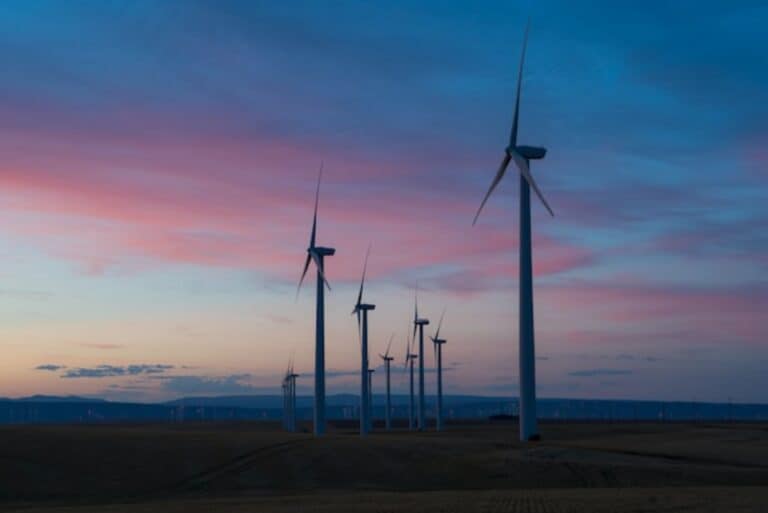
According to ChatGTP, OpenAI is committed to reducing its carbon footprint and promoting sustainability initiatives, such as investing in renewable energy sources (produced, for example, through solar panels or wind turbines), improving its data centres and energy efficiency, and reducing waste and water use.
However, there is no data on what ChatGPT does to improve its environmental and social impact.
The other side of the coin: Can ChatGPT help fight climate change and social divides?
Although some negative social and environmental costs of using ChatGTP seem inevitable, there are also potential benefits of using artificial intelligence applications and automation systems such as ChatGTP in some fields, including the sustainability sector.
In general, some major social and environmental benefits of using AI are, for example, improving transportation networks, predicting disasters more accurately, and generating and analysing increasingly accurate quality data on emissions, forestry, mitigation, and population.
According to ChatGTP, the ways and areas in which machine learning models and AI could benefit the sustainability sector are:
- Improving energy efficiency concerning distribution and consumption processes in various industries, reduce their carbon footprint, and promote renewable energy solutions.
- Improving waste management in terms of collection, recycling, and waste reduction.
- Developing more accurate climate models to predict the environmental impact of companies’ products and activities on environmental conditions, facilitating decision-making by policymakers, experts and CEOs.
- Optimising agricultural practices, reducing the use of harmful chemicals and decreasing the environmental impact of such substances.
- Sustainable transportation, improving transportation networks and flows, energy use, reducing vehicle emissions and the overall carbon footprint of transportation systems.
- Optimisation of renewable energy systems.
On the social side, ChatGTP’s response to its commitment to social inequalities remains vague:
“ChatGPT can be used to improve access to information and services, which can benefit underserved communities and help reduce social inequalities. However, ensuring that these applications are designed and distributed inclusively and equitably is important and do not perpetuate or worsen existing social inequalities.”
In this regard, ChatGTP’s response emphasises that OpenAI is committed to several social responsibilities, such as:
- Developing inclusive language models.
- Addressing bias and equity.
- Promoting transparency and accountability.
- Collaborating with diversity & inclusion initiatives.
However, considering the negative comments presented above, their implementation is somewhat controversial. This has put even more pressure on OpenAI and other AI creators and developers: they need to provide evidence of their efforts and concrete actions to develop AI systems with greater efficiency, maximise energy consumption, improve carbon footprint and minimise discrimination through their algorithms.
AI and sustainability: Are we going in the right direction?
After considering the main advantages and disadvantages of integrating AI and ChatGTP into the social and production structure, it is clear that it will have an impact on human beings and the planet.
With the data and analysis available to date, the negative impacts of AI on the environment and society outweigh the positive ones, for example, by increasing energy demand and carbon emissions and reproducing social power imbalances through online media.
Despite this scepticism, we do not want to dampen enthusiasm for ChatGTP and other artificial intelligence applications altogether but rather analyse the limitations of AI and emphasise the responsibilities of addressing potential harmful repercussions.
In addition, we want users to remain critical about the possible social and environmental impacts ChatGTP might have, making them aware of these issues first.